
Stay informed and inspired in the world of AI with us.

California's ALERTCalifornia network shows where production computer vision becomes an operational system. In 2025, it helped Cal Fire respond to roughly 3,600 wildfire incidents, with cameras detecting smoke before the first 911 call in more than half of them. The cameras accelerate detection; Cal Fire retains control over the response that follows. Galicia runs a similar model. Its system, Xeocode, scans camera and satellite feeds with convolutional neural networks trained to catch a rising sm
Published: August 28, 2026
In 2025, Waymo's driverless vehicles crossed a threshold: independent, peer-reviewed data, not company demos, backed up the safety claims. A peer-reviewed analysis of 56.7 million rider-only miles found a 92% drop in pedestrian injury crashes compared to human-driver benchmarks, plus a 96% reduction in intersection crashes and an 82% reduction in cyclist and motorcyclist injury crashes. Waymo's own dashboard has since tracked the pedestrian figure at 220.6 million miles — more than triple the st
Published: August 18, 2026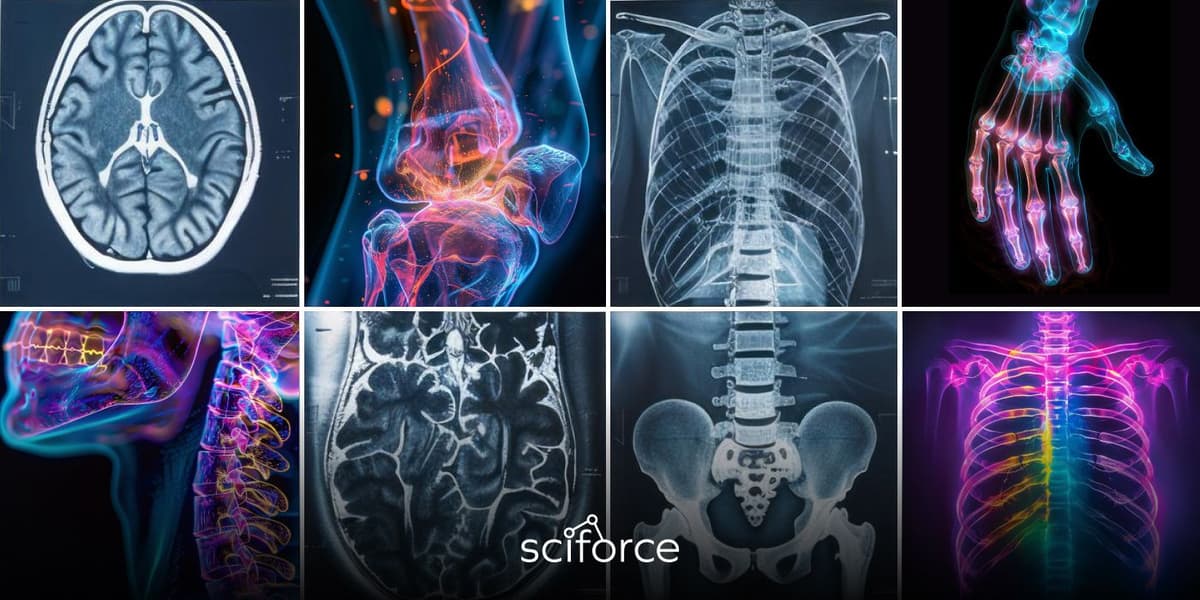
A radiologist on a standard hospital shift may read dozens to well over a hundred imaging studies, depending on subspecialty, setting, shift structure, and case complexity. Each one is a search for something that might be subtle, easy to miss, or buried in noise. At that volume, non-trivial discrepancy or error rate is a known risk in radiology practice, especially under high workload and time pressure. Radiologists are working through growing imaging volumes with a workforce that has never full
Published: June 30, 2026
AI-powered products can create real value, but only when they continue working reliably in the hands of customers. What makes this difficult is that their behavior doesn’t stay fixed after release. As data changes, so does model performance, which means that quality can decline even when no one touches the code. According to the 2024 DORA report, elite teams typically deploy on demand (multiple times per day), recover from failed deployments in under an hour, and keep change failure rates around
Published: February 6, 2026
A computer vision model can look perfect during testing and then fall apart the moment it meets real life. The contrast is often dramatic. An MIT review found some face-analysis systems making mistakes on 34.7% of dark-skinned women, while the error rate for light-skinned men stayed under 1%. In agriculture, models that scored 95–99% accuracy on clean lab photos fell to 70–85% on real crops. And in radiology, an RSNA review showed four out of five models performing worse on data from another hos
Published: January 30, 2026
Coding is changing fast, and AI is now writing much of it. In 2025, more than 15 million developers use copilots like GitHub Copilot, Google Gemini Code Assist, and OpenAI’s coding tools to work faster and with fewer mistakes (GitHub usage data). Surveys show that 9 out of 10 engineering teams rely on AI assistants, with many reporting 25–50% productivity gains. The newest trend is the rise of specialized copilots for speech recognition and computer vision. These tools include built-in knowledge
Published: September 24, 2025
According to WEKA's 2023 Global Trends in AI Report, 69% of organizations now have AI projects up and running, and 28% are using AI across their whole business. This shows a big move from just trying out AI to making it a key part of how companies operate and succeed. However, this is just the beginning as the major point is not to have only AI but to move from AI pilot projects to production-ready systems that work to your benefit. Organizations have to address various challenges such as the c
Published: April 4, 2024
Computer vision (CV) is a part of artificial intelligence that enables computers to analyze and understand visual information, both images and videos. It goes beyond plain “seeing” an image, but teaches computers to make decisions based on what they see. The AI-driven computer vision market is experiencing rapid growth, rising from $22 billion in 2023 to an expected $50 billion by 2030, with a 21.4% CAGR from 2024 to 2030. This technology imitates human vision but works faster using sophisticat
Published: March 8, 2024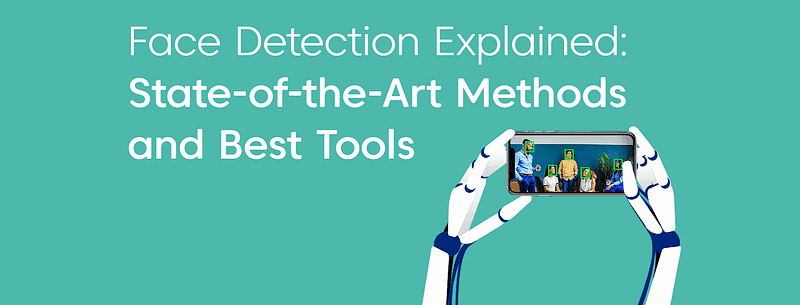
So many of us have used different Facebook applications to see us aging, turned into rock stars, or applied festive make-up. Such waves of facial transformations are usually accompanied by warnings not to share images of your faces — otherwise, they will be processed and misused. But how does AI use faces in reality? Let’s discuss state-of-the-art applications for face detection and recognition. First, detection and recognition are different tasks. _Face detection_ is the crucial part of face re
Published: June 17, 2021
At the beginning of April 2021, Neuralink’s new video featuring a monkey playing Pong with his mind hit the headlines. The company’s as-always-bold statements promise to give back the freedom of movement to people with disabilities. We decided to look beyond the hype and define what these brain-computer systems are capable of in reality. Let’s dive right into it. Brain-computer interfaces (BCIs)* or *Brain-machine interfaces (BMIs) capture a user’s brain activity and translate it into commands f
Published: May 20, 2021